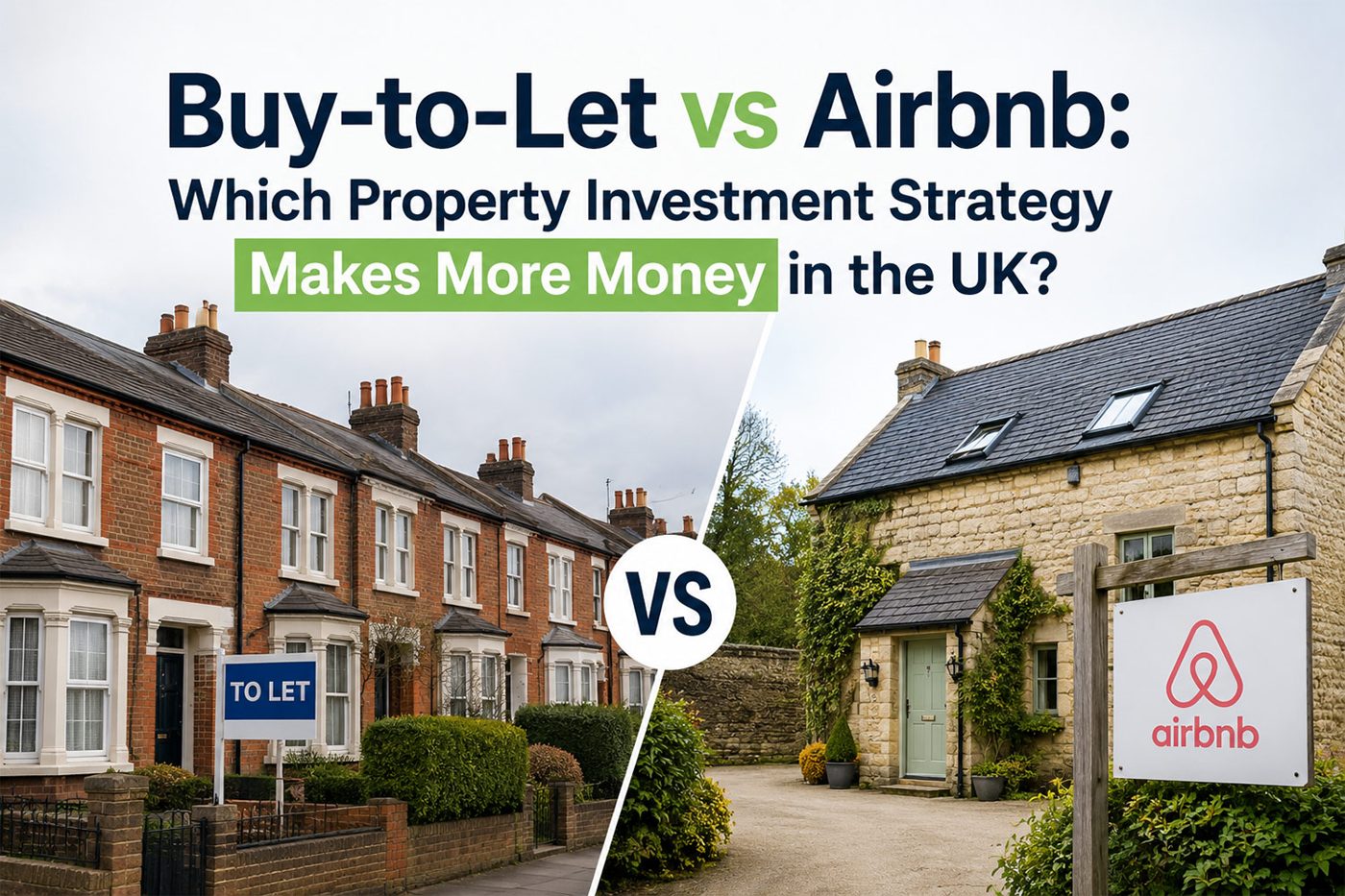
When investing in UK property, one of the most common questions investors ask is whether buy-to-let (BTL) or short-term letting via platforms like Airbnb generates higher returns.
The answer depends on income goals, risk tolerance, location, and how hands-on you want to be. Both strategies can be profitable, but they operate very differently.
What is Buy-to-Let (BTL) Property Investment?
Buy-to-let involves purchasing a property and renting it to long-term tenants under an assured shorthold tenancy (AST).
This is the traditional property investment model in the UK.
Advantages of Buy-to-Let
- Stable, predictable monthly rental income
- Long-term tenants reduce turnover and vacancy risk
- Easier to finance with most UK mortgage lenders
- Lower day-to-day management requirements (especially with letting agents)
- Suitable for long-term wealth building and capital appreciation
Typical Buy-to-Let Returns in the UK
- Average gross rental yields: 3%–6%
- Higher yields possible in regional cities such as Manchester, Liverpool, and Birmingham
- London generally offers lower yields but stronger capital growth potential
Challenges of Buy-to-Let
- Tax changes (e.g. mortgage interest relief restrictions under Section 24)
- Increasing regulation and compliance costs
- Potential void periods between tenants
- Slower income growth compared to short-term letting
What is Airbnb (Short-Term Let Property Investment)?
Short-term letting involves renting out a property on a nightly or weekly basis through platforms such as Airbnb.
It is often considered a higher-yield but more active investment strategy.
Advantages of Airbnb / Short-Term Lets
- Higher income potential compared to traditional renting
- Flexible pricing based on demand, seasonality, and events
- Ability to use the property personally when not rented
- Strong demand in tourist and business locations
Potential Returns from Airbnb
In strong locations, short-term lets can generate:
- 1.5x to 3x higher gross income compared to buy-to-let
- Higher occupancy rates during peak seasons
- Significant revenue spikes during events and holidays
Challenges of Airbnb Investment
- Higher operating costs (cleaning, utilities, furnishings, management fees)
- Income volatility due to seasonality
- Increased time and management intensity
- Local regulations and restrictions in many UK cities
- Mortgage and insurance limitations for short-term lets
Buy-to-Let vs Airbnb: Key Differences
Which Property Investment Strategy Makes More Money?
There is no universal winner — profitability depends on how and where you invest.
Airbnb tends to perform better when:
- The property is in a high-demand tourist or business location
- Short-term rental regulations are favourable
- Professional management systems are in place
- High occupancy rates can be consistently achieved
Buy-to-let tends to perform better when:
- You want stable, passive income
- You prefer lower risk and long-term tenants
- You are building a scalable property portfolio
- You are investing in areas with strong rental demand
Final Verdict
- Airbnb = higher earning potential, higher risk, more active management
- Buy-to-let = lower but more stable income with long-term security
Most experienced UK property investors eventually adopt a hybrid strategy , using buy-to-let for stability and selectively using short-term lets for higher-yield opportunities.
Conclusion
Choosing between buy-to-let and Airbnb depends on your investment goals.
If your priority is passive income and stability , buy-to-let is usually more suitable. If you want higher returns and are willing to manage an active business model , Airbnb can outperform — but with significantly more risk and effort.
Talk to Power Team®
Want this applied to your own numbers?
We work with landlords, investors and owner-managed businesses across the UK. Tell us where you are and we'll come back within one working day. A first conversation is free and genuinely useful.
Or book a call directly